Promoting Traditional Catholicism in Central Iowa

Category: Events & News Page 1 of 7

Types of Masses

The Three Principal Forms of the Traditional Latin Mass

From the earliest centuries of the Church, the bishop was the ordinary celebrant of the Holy Eucharist.  Surrounded by his clergy, he offered the Holy Sacrifice as the visible head of the local Church.  This episcopal liturgy – later known as the Pontifical Mass – is historically the Mass par excellence.  As the Church expanded and priests were increasingly delegated to celebrate Mass throughout growing dioceses, forms of the Roman Rite developed that reflected differing degrees of solemnity and available ministers.  From this organic development arise three principal forms of the Traditional Latin Mass.

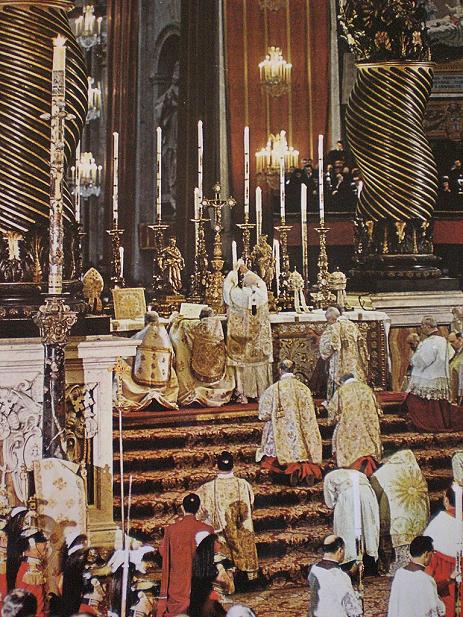
  1. Pontifical Mass (Missa Pontificalis), and the Solemn Mass (Missa Solemnis)

The Pontifical Mass, celebrated by a bishop, represents the highest and most complete expression of the Roman Rite.  (In our modern day and age, this form is rarely seen.)  It includes additional rites, vestments, and ceremonial actions – such as the use of the throne, mitre, and crozier – that manifest the fullness of episcopal authority and the hierarchical nature of the Church.  When a bishop is not present, this solemnity is delegated to the priest through the Solemn Mass, celebrated with a deacon and subdeacon.  Traditional liturgical sources and FSSP instruction consistently emphasize that the Solemn Mass is not a separate category, but rather the priestly participation in the Church’s episcopal liturgy.

  1. Low Mass (Missa Privata)

The Low Mass is the simplest and most commonly celebrated form of the Roman Rite.  Offered by a priest with minimal ceremonial and without chant, it is marked by the quiet recitation of prayers, assisted by a server.  This form became common as daily Masses multiplied and clergy were required to serve numerous parishes and chapels.  Its restrained exterior directs attention to interior participation, emphasizing personal devotion, recollection, and the sacrificial character of the Mass.  While limited experiments such as the Dialogue Mass appeared in the mid-20th century, traditional commentators and priests of the FSSP have consistently underscored the contemplative ethos proper to the Low Mass.

  1. Sung Mass (Missa Cantata)

The Sung Mass occupies an intermediate place between the Low Mass and the Solemn Mass. Structurally a Low Mass, it incorporates Gregorian chant for the Ordinary and Propers and may include incense, while lacking the deacon and subdeacon required for full solemnity. The Missa Cantata developed organically in parish life where sacred music was desired but sufficient ministers were unavailable. As explained in traditional rubrical manuals and FSSP catechesis, it is best understood not as a true “High Mass,” but as a Low Mass elevated by chant and ceremonial expression.

In every form—whether episcopal, solemn, sung, or quiet—the same Sacrifice of Calvary is made present upon the altar, differing only in outward solemnity, never in substance.
Dialogue Mass

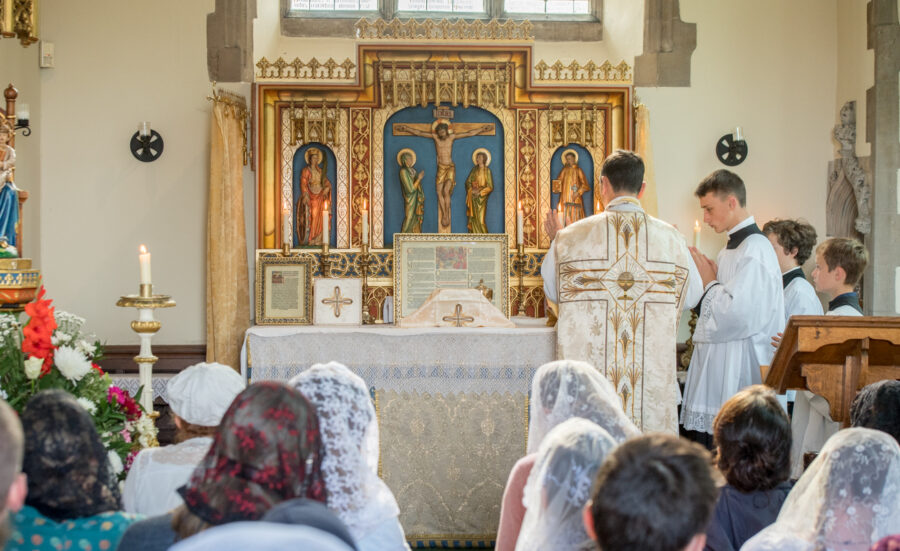
A Dialogue Mass is a form of the Low Mass in which the congregation makes some or all of the spoken responses aloud together, instead of leaving them entirely to the server.

What defines a Dialogue Mass

In a traditional Low Mass, the priest recites the prayers quietly while the server alone gives the responses on behalf of the people.  In a Dialogue Mass, the faithful are encouraged to respond verbally at certain points, such as:

  • Et cum spiritu tuo
  • The responses at the Confiteor
  • The Sanctus and Agnus Dei
  • Sometimes even the Domine, non sum dignus

Importantly, the Mass remains a Low Mass: there is still no chant, no deacon or subdeacon, and no sung Propers or Ordinary.

Historical background

The Dialogue Mass arose in the early 20th century, particularly in parts of France, Germany, Belgium, and later the United States, influenced by the Liturgical Movement.  Pope St. Pius X encouraged greater understanding of the liturgy, and Pope Pius XI and Pius XII later permitted limited forms of congregational responses in Low Masses.

The practice was never mandated and was regulated by rubrical permissions, notably in Mediator Dei (1947). Even at its height in the 1940s–1950s, the Dialogue Mass was optional and unevenly adopted.

Traditional evaluation

Traditional liturgical commentators – and priests of communities such as the FSSP – often note that the Dialogue Mass was an experiment, not an organic development of the Roman Rite.  Critics argue that it blurs the distinct liturgical roles of priest, server, and congregation, and can distract from the contemplative silence that characterizes the Low Mass.

Key point
A Dialogue Mass is not a separate form of Mass.  It is simply a Low Mass with spoken congregational responses, permitted but never required, and today rarely used in traditional Latin Mass communities.

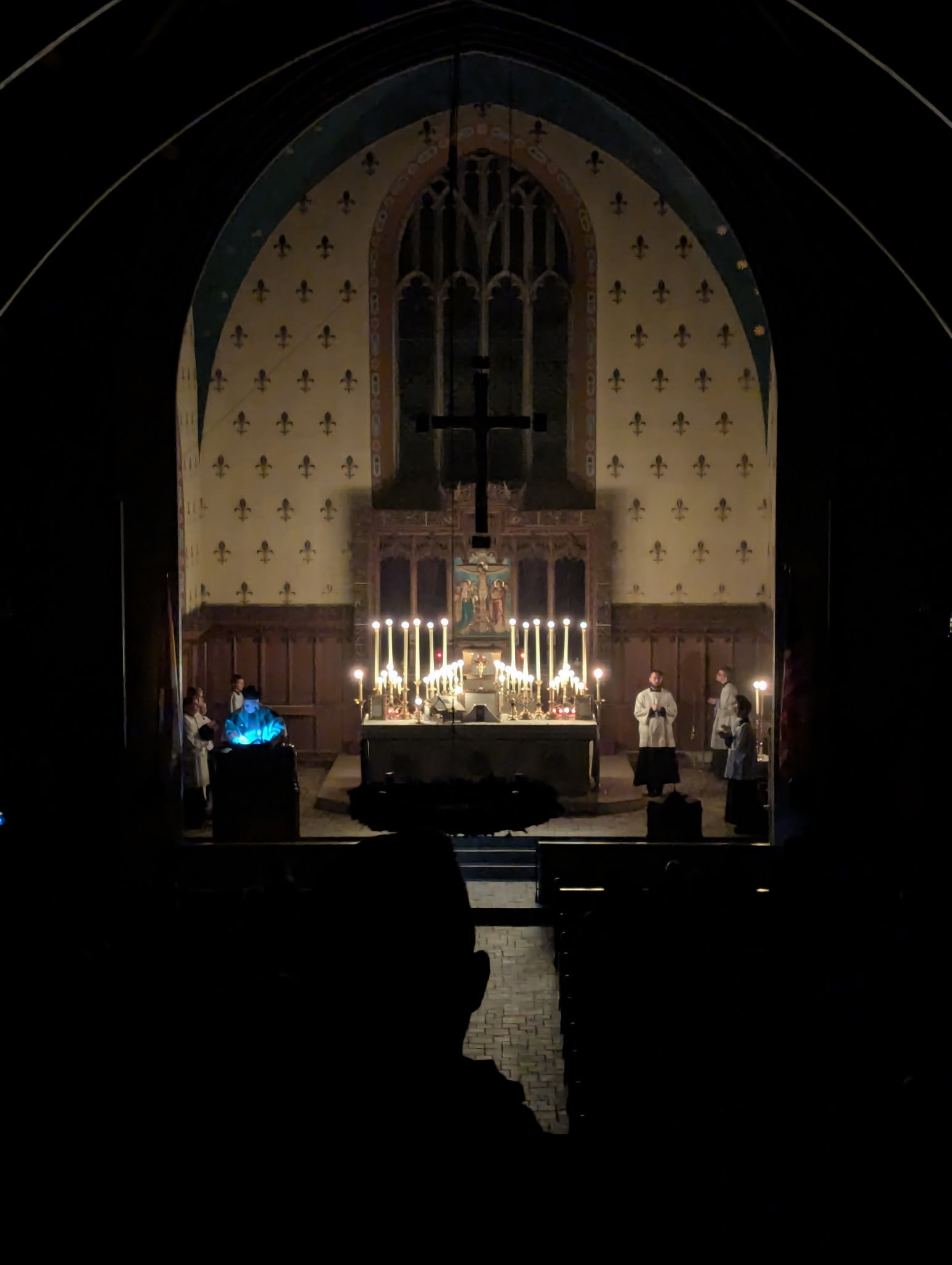
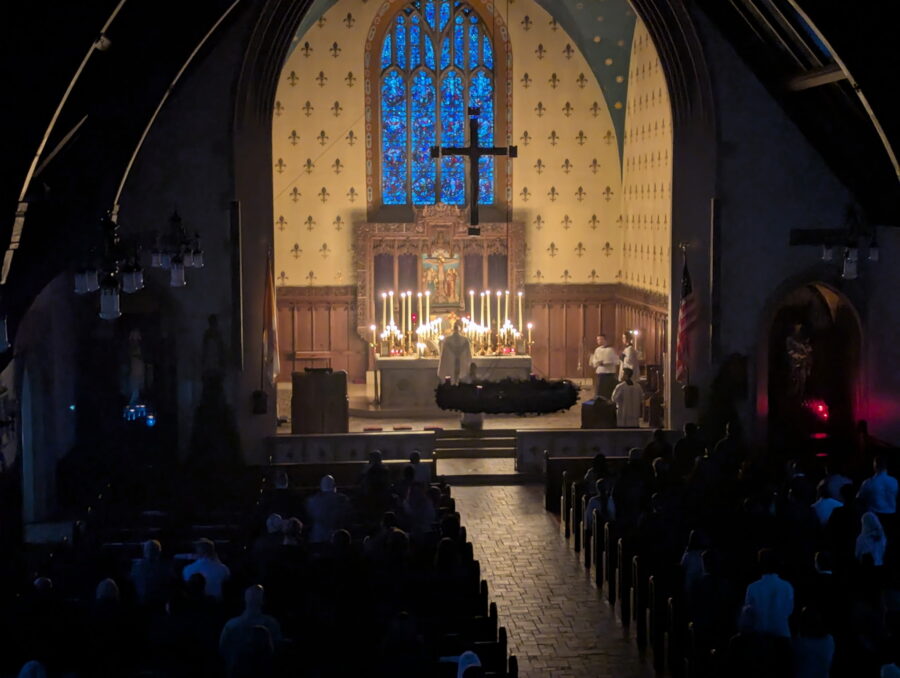
Sermon for the Rorate Caeli Mass

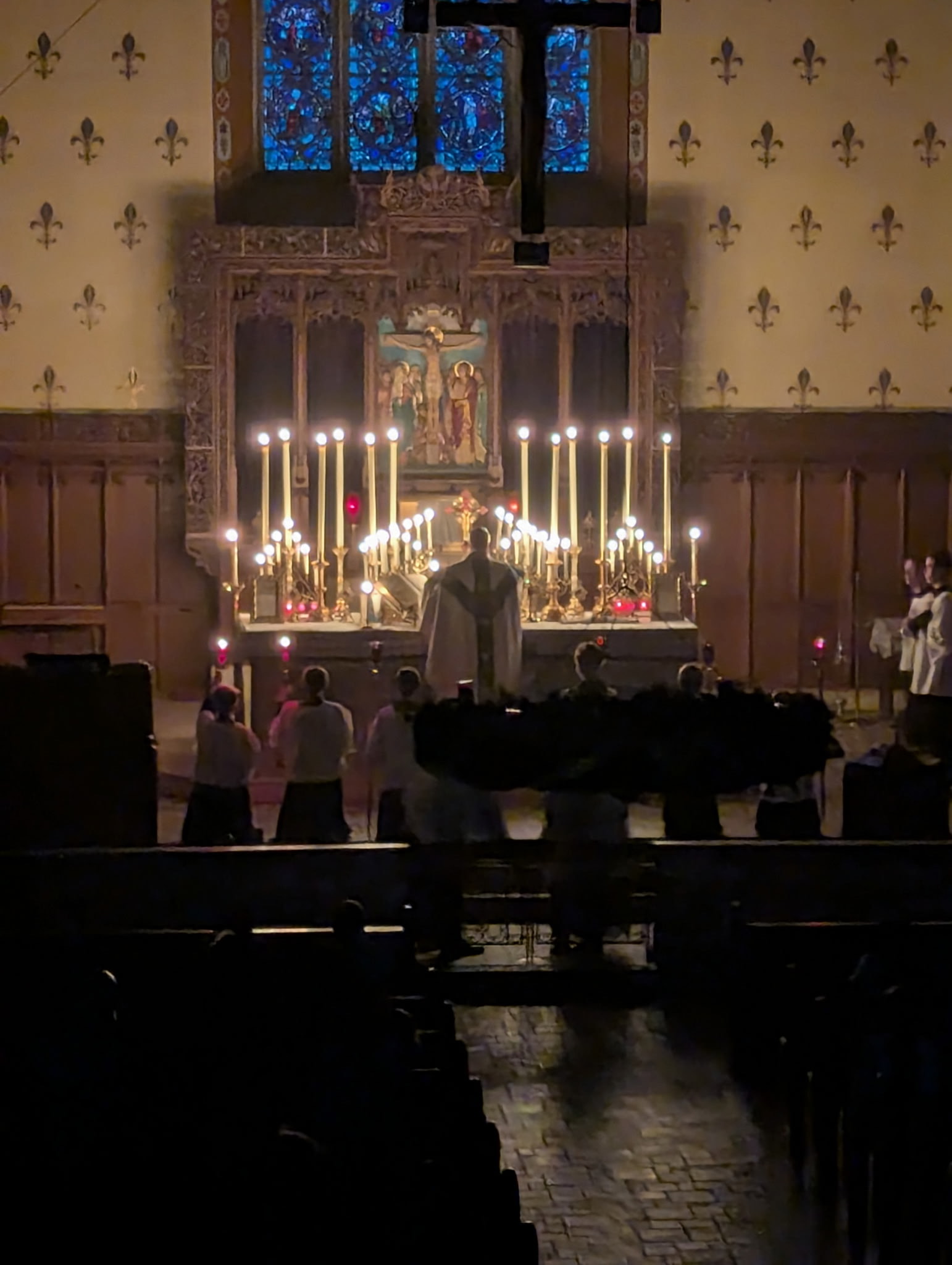
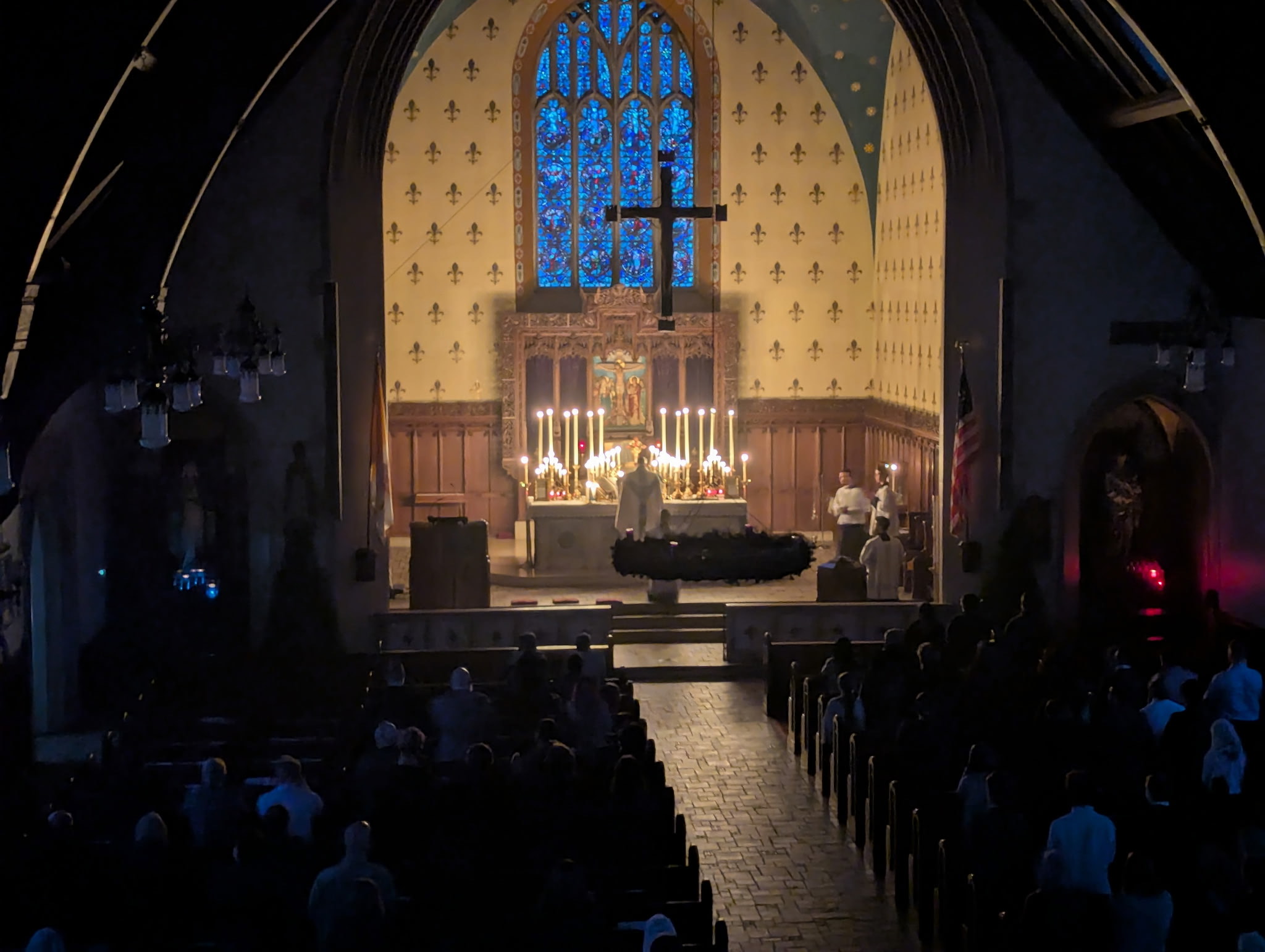
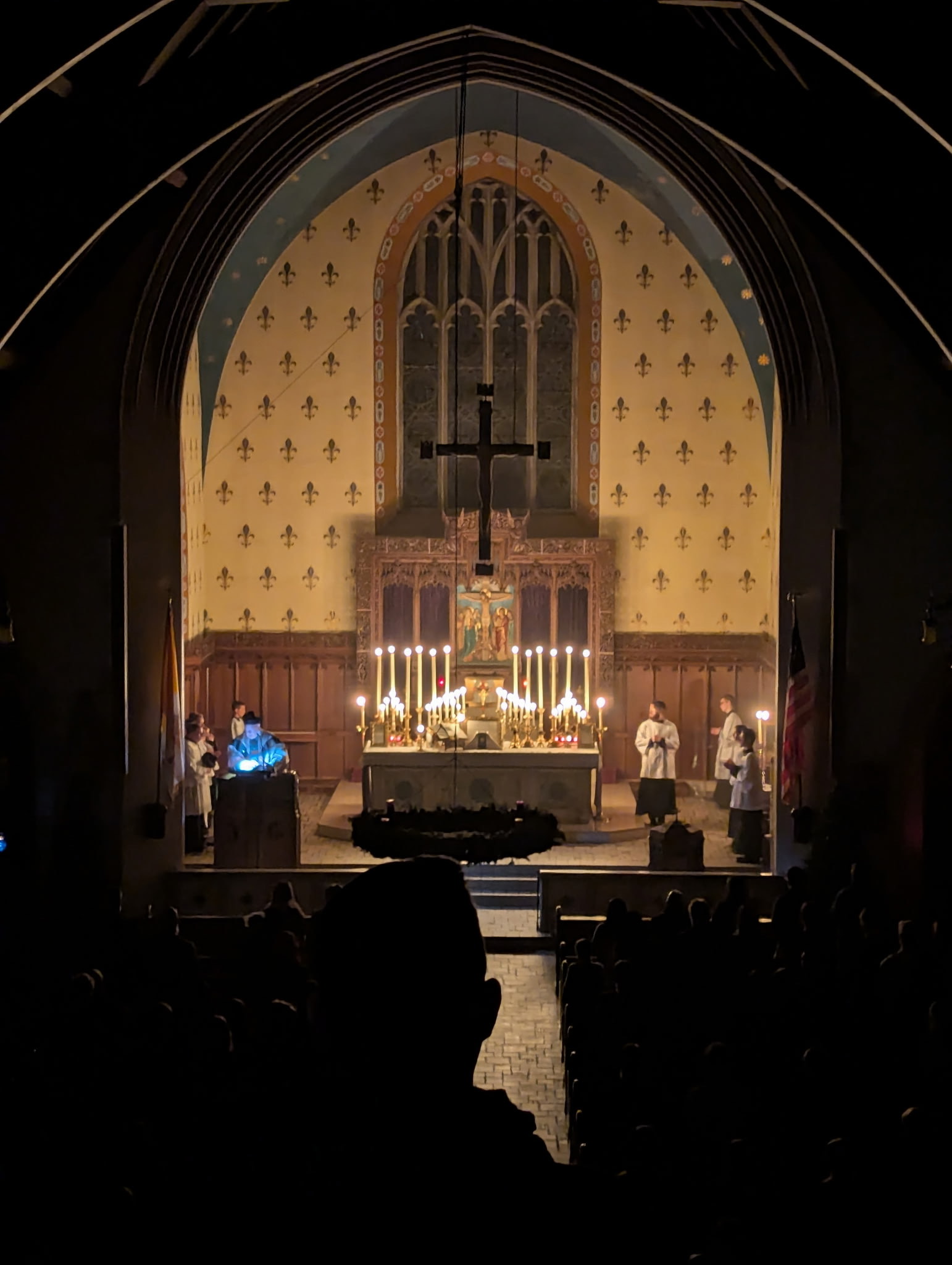
The following sermon was preached by Fr. Jason Catania on December 6, 2025 in celebration of the Rorate Caeli Mass.

“Rorate caeli desuper, et nubes pluant iustum…” — “Drop down dew, ye heavens, from above, and let the clouds pour down righteousness.”

We gather before sunrise, in the soft glow of candlelight, to celebrate this Rorate Caeli Mass—one of the most beautiful treasures of our Advent tradition. We come in darkness, not because it is convenient (it most certainly is not!), but because this moment expresses something deeply theological: the experience of humanity before Christ, and often, if we are honest, the experience of the human heart even now.

For much of human history, the world waited—waited for the Messiah, waited for the promise, waited for God to act. Israel prayed, year after year, century after century: “Drop down dew, ye heavens. Let the clouds pour down righteousness.” This was not a merely poetic request. It was the cry of a people who felt abandoned, exiled, and empty. And in many ways, that same cry rises again today—from a secularized world that has forgotten its Creator; from the wounded, torn places of society; and from the quiet suffering many carry inside. The human heart still longs to be rescued, it still aches for peace, it still waits for God to be near.

Yet into that longing, God has spoken—not with explanations, but with a promise: “Behold, a Virgin shall conceive and bear a Son.” A promise that seemed impossible, a promise that required faith. And that promise was entrusted to one heart: the Immaculate Heart of Mary.

As so today, Our Lady stands before us not only as the Mother of Christ but as the model of Advent waiting. Mary did not fully understand all the details. She was certainly not given a blueprint, nor a guarantee that life would be smooth. Her “yes” brought misunderstanding, uncertainty, poverty, and suffering—but it also brought the Savior. Her fiat—“Let it be done to
me according to thy word”—was truly the hinge of history.
Through Mary, God teaches of us three things:

  • Grace enters through humility.
  • Salvation comes through surrender
  • The eternal breaks into time through trust.

The world looked for a Messiah crowned in power; God sent a Child hidden in her womb. The world expected thunder; God worked in silence. The world expected immediacy; God chose nine months of waiting. So too in our lives, God rarely answers with speed or spectacle. He comes quietly, he works slowly. His presence within us grows just as Christ grew in her—hidden,
mysterious, steady.

Our waiting must be active—not anxious, but attentive. Mary did not simply wait; she made room. She listened. She pondered. She prepared. Her heart became a living manger before Bethlehem ever saw straw. The holy season of Advent invites us to do the same:

  • To make room for silence in a noisy world.
  • To welcome repentance in a distracted soul.
  • To trust God’s timing in unanswered prayers.
  • To believe that even in the darkness, He is already at work.
    The great tradition of the Church teaches that Christ comes to us in a threefold Advent:
  1. In history — as a Child born of Mary in Bethlehem.
  2. In mystery — in the sacraments, especially the Holy Eucharist.
  3. In majesty — at the end of time, when every tear will be wiped away and every knee shall bow.

The Rorate Mass focuses on the second: Christ coming to us her and now in the Holy Sacrifice of the Mass. As the light grows slowly in this church, let it remind us that grace grows gradually. Holiness is not sudden. God does not rush, because genuine love never rushes.

Each of us have areas of our life that remain unfinished, uncertain, or heavy. Perhaps it is a sin we struggle with, a fear that robs us of peace, a wound that has not healed, or a prayer that seems unanswered. This morning, let us bring those struggles to Mary. For just as she was the first to receive Christ—she now brings Him to us. At Bethlehem, she gave Him to shepherds. At Cana, she revealed Him to disciples. At Calvary, she offered Him for the world. In the Upper Room, she prayed until the decent of the Holy Spirit. She will do the same now if we let her.

In a few moments, as Mass continues, the darkness around us will soften, and the world outside will brighten—not because we demand it, but because morning comes inevitably. And that encapsulates the message of Advent: Night does not have the final word, the Light is coming, Christ is near. So let us pray with confidence: Rorate caeli desuper. Drop down dew, O heavens. Let the clouds pour down righteousness.
Come, Lord Jesus.
Do not delay.
✣In the name of the Father, and of the Son, and of the Holy Ghost. Amen

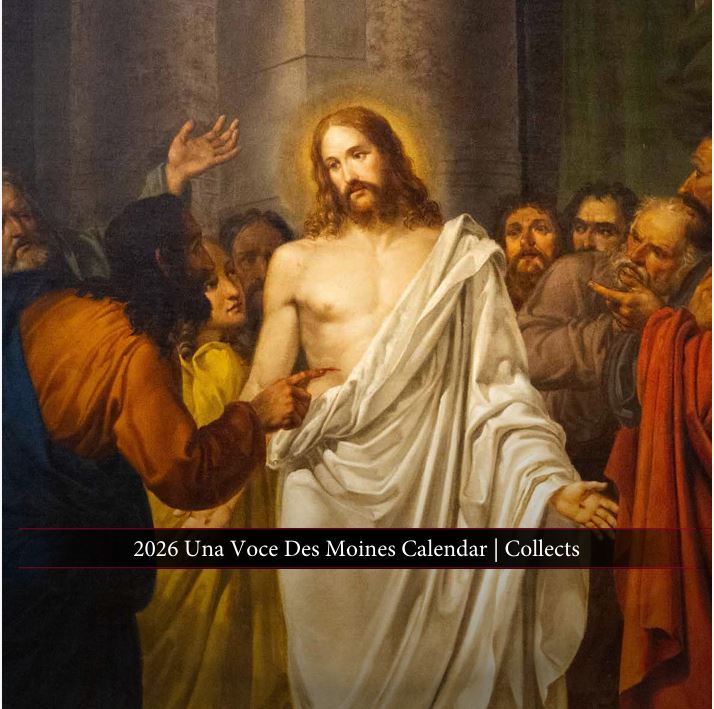
2026 Una Voce DSM Liturgical Wall Calendar For Sale!

Thanks to TAN Press, the graphic design skills of D. White, and the artistic eye of Kara Knupp, we have a 2026 Liturgical Calendar just in time for Advent/Christmas shopping!

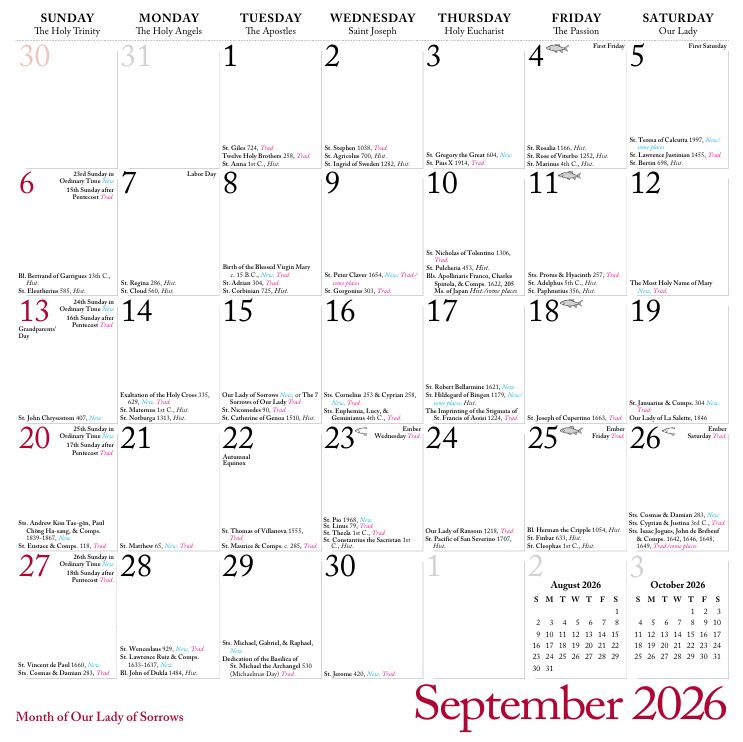
This unique, spiral-bound 10.5″ x 10.5″ calendar, containing special feasts and fascinating Catholic traditions, is marked with days of Fasting, special Saints Days, and the Sundays of the Liturgical Year for both the New and Traditional calendars.

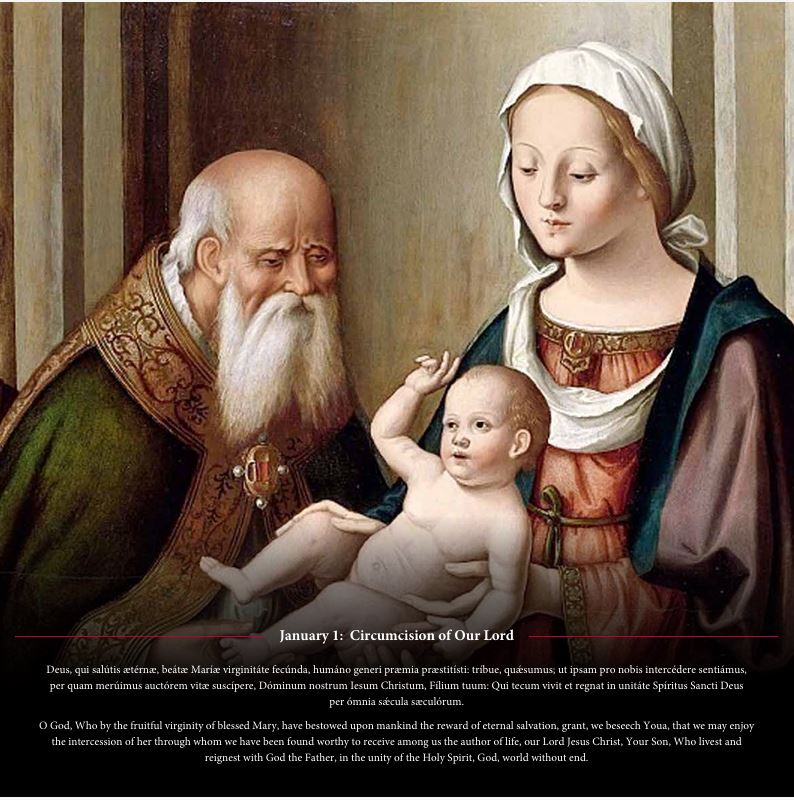
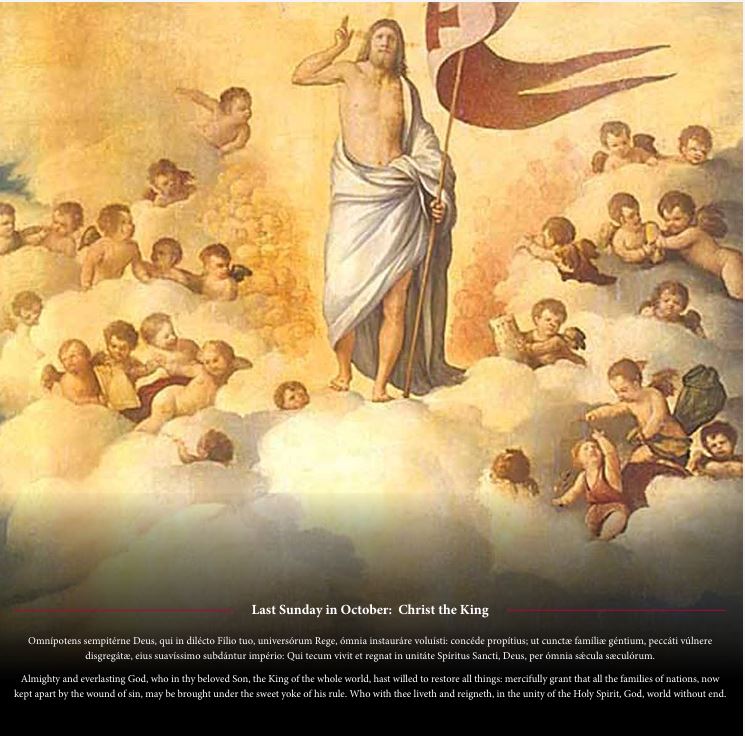
Moreover, the theme of this year’s calendar is Collects, with excerpts taken from TLM-specific feasts of the Missale Romanum.

Each day has indications for the liturgical calendar in both Usus Antiquior (old calendar feast days) and the Usus Recentior (new calendar feast days), as well as abstinence or fast symbols.  N.B. Under each day of the week, there is a theme which is traditionally observed.

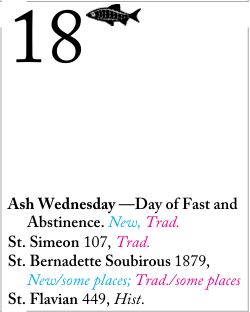
At the beginning of the calendar, there’s an entire page on spiritual fasting and the symbols that each day indicate. Here’s a look at Ash Wednesday, and what it prescribes.

Be sure to share with your friends and family, but order quickly as Christmas is in a few weeks and we have a limited supply!

Calendar costs:

1 calendar – $20

6 calendar – $100

(Additional cost for shipping TBD)

Also, a special thanks to four sponsors this year for helping underwrite the cost of the calendar, which means more of the proceeds can support the mission of Una Voce DSM to educate central Iowa on the beauty of Traditional Catholicism.

For more information, email Bryan @ info@unavocedsm.org or call/text 812.686.6102.

Happy Allhallowtide!

As we enter this short but sacred liturgical season from October 31 to November 2, we invite you to join us in remembering, celebrating, and praying during the three‐day period known as Allhallowtide (also called Hallowtide or Allsaintstide). This short season runs from October 31–November 2 and carries its own distinct character for each day.


October 31 – Vigil of All Saints (All Hallows’ Eve)

On October 31 the Church observes the vigil of All Saints’ Day, commonly called All Hallows’ Eve (or Halloween). In the traditional liturgy this day is treated with a penitential spirit: purple vestments are used, marking a time of preparation and watchfulness. This vigil invites us to reflect on the “last things” — death, judgment, heaven, and hell — and to ready ourselves to celebrate the saints who have triumphed in Christ. Remember, in the traditional calendar, vigil days observed by penance where fasting and abstincence are appropriate. (It helps that this year, the vigil falls on a Friday anyway.)


November 1 – All Saints’ Day

November 1 is the solemn feast of All Saints, when we honor both the canonized saints and the countless holy men and women known only to God. The liturgical color is white or gold, symbolizing victory and the glory of heaven. The faithful are called to rejoice in the communion of saints, the Church Triumphant, and to ask for the intercession of those who already enjoy God’s presence.

November 2 – All Souls’ Day

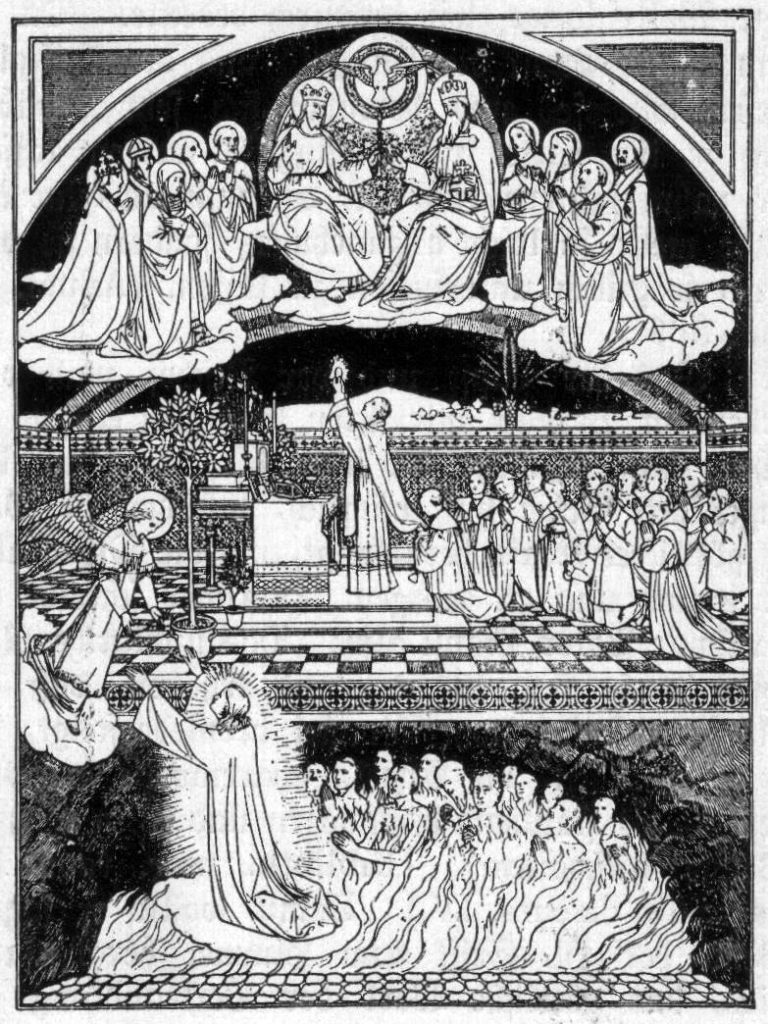
On November 2 we observe All Souls’ Day, the Commemoration of All the Faithful Departed. The traditional liturgical color is black, a mark of mourning and prayerful remembrance. On this day the Church Militant on earth prays especially for the Church Suffering — the souls in purgatory — that they may be purified and enter into eternal life. In the traditional calendar, this year’s feast gets bumped to Monday, because it’s considered a “commemoration of the dead”, which is not a high enough holy feast day to supplant or replace Sunday’s liturgy, in which we commemorate the Resurrection.

Catholic Roots of Halloween and This Triduum

While modern culture often treats Halloween as a secular or even spooky holiday, the truth is that it is deeply rooted in Catholic tradition. (This in no way endorses the way in which the modern world treast Halloween, though!) The word “Halloween” itself comes from “All Hallow’s Eve” — the evening before All Saints’ Day. The three days together form the triduum of Allhallowtide: October 31 (vigil), November 1 (All Saints), and November 2 (All Souls). In other words, one cannot divorce the secularl holiday of Halloween from the Catholic feast of All Saints Day.

Far from being merely pagan, this observance centers on the Catholic belief in the communion of saints, the reality of eternal life, and the bond between the living, the dead, and the saints.

Familial Obervance at Home

In this season you might emphasize visiting cemeteries, lighting candles, and praying for the dead, attending Masses on these feast days, and reminding one another of the hope we have in Christ. Let us use these days to remember that we are part of a vast family in Christ — the living (the Church Militant), the departed (the Church Suffering), and those already in glory (the Church Triumpant).

Christ the King and the Saints: A Liturgical Pairing with Purpose

In the traditional Roman calendar, the Feast of Christ the King is celebrated on the last Sunday of October, immediately before All Saints’ Day. This placement is not incidental but deeply theological. Pope Pius XI, in his 1925 encyclical Quas Primas, established this feast in response to growing secularism and the rejection of Christ’s authority in public life. He chose its date to crown the liturgical year with Christ’s glory and to prepare for the celebration of His victory in the saints.

Pius XI wrote:

“The last Sunday of October seemed the most convenient…because…before celebrating the triumph of all the Saints, we proclaim and extol the glory of him who triumphs in all the Saints and in all the Elect” (Quas Primas, 29).

This proximity reveals a profound spiritual logic. Christ reigns now – over individuals, families, and nations. The saints are the proof of His reign, the fruit of His Kingdom already present on earth. By celebrating Christ’s Kingship immediately before honoring the saints, the Church proclaims that sanctity is not a private ideal, but a political reality under the governance of the true King.

The 1969 calendar reform moved the feast to the final Sunday of the liturgical year, just before Advent. While this new placement underscores Christ’s eschatological kingship – His final return in glory – it risks downplaying His present sovereignty. As Dr. Peter Kwasniewski points out, Pius XI emphasized the current reign of Christ over all peoples and governments, a truth urgently needed in an age increasingly hostile to divine authority.

Indeed, Pius XI insisted:

“Nor is there any difference…between the individual and the family or the State; for all men…are under the dominion of Christ” (Quas Primas, 18).

The traditional calendar’s October placement stands as a liturgical catechesis: Christ is King now, and the saints are His citizens. Their holiness is not merely personal – it is political, social, and cultural, challenging the modern world to submit to Christ’s rule not just in hearts, but in laws, institutions, and nations.

Further Reading:

2025 Traditional Tenebrae

A word meaning “darkness” that is the title of the solemn chanting of Matins and Lauds for each day of the Sacred Triduum.  It is the most sobering and penitential time of the Liturgical Year, a roughly two-hour liturgy of meditation, psalms, and chants to help force us to focus on the deepest sentiments of the Sacred Heart of Our Suffering Redeemer.

For more information on Tenebrae, visit this article:

To continue our tradition of preparing for Easter Sunday, a faithful group gathers at 5 am in the Adoration Chapel at St. Augustin’s to pray this wonderful Sacred Office of the Church.

Candlemas

Monks of Clear Creek with Candles

This post was originally published here, on Our Lady of Clear Creek Abbey’s website.

The blessing of candles is a tradition known to many Catholics. But why is it a significant and beautiful tradition?

The mystery of to-day’s ceremony of the blessing of candles has frequently been explained by liturgists, dating from the 7th century.

According to St. Ivo of Chartres, the wax which is formed from the juice of flowers by the bee, (which has always been considered as the emblem of virginity,) signifies the virginal flesh of the Divine Infant, who diminished not, either by his conception or his birth, the spotless purity of his Blessed Mother. The same holy Bishop would have us see, in the flame of our Candle, a symbol of Jesus, who came to enlighten our darkness. St. Anselm Archbishop of Canterbury, speaking on the same mystery, bids us consider three things in the blest Candle: the Wax, the Wick, and the Flame. The Wax, he says, which is the production of the virginal bee, is the Flesh of our Lord; the Wick, which is within, is his Soul; the Flame, which burns on the top, is his Divinity.

Formerly, the Faithful looked upon it as an honor to be permitted to bring their wax tapers to the Church, on this Feast of the Purification, that they might be blessed together with those, which were to he borne in the procession by the Priests and sacred Ministers; and the same custom is still observed in some congregations. It would be well if Pastors were to encourage this practice, retaining it where it exists, or establishing it where it is not known. There has been such a systematic effort made to destroy, or, at least, to impoverish the exterior rites and practices of religion, that we find, throughout the world, thousands of Christians who have been insensibly made strangers to those admirable sentiments of faith, which the Church alone, in her Liturgy, can give to the body of the Faithful. Thus, we shall be telling many what they have never heard before, when we inform them, that the Church blesses the Candles to-day, not only to be carried in the Procession, which forms part of the ceremony, but, also, for the use of the Faithful, inasmuch as they draw, upon such as use them with respect, whether on sea or on land, (as the Church says in the Prayer,) special blessings from heaven. These blest Candles ought, also, to be lit near the bed of the dying Christian, as a symbol of the immortality merited for us by Christ, and of the protection of our Blessed Lady.

Mass Intentions

Taken from Fisheaters:

A Catholic may ask any priest to offer Mass for a certain intention, whether or not the priest is personally known to him, whether or not the person is able to attend that specific Mass. When requesting this, money plays no inherent role. No one can ever “buy a Mass.” But it is customary to offer what’s called a “stipend,” a small amount recommended by a priest’s Bishop. A Catholic can offer as much as he likes, however, but no money is required to ask that a Mass be said for a specific intention.

Because the merits of the Mass are infinite, any number of intentions may be made in a given Mass, but a priest can only receive one stipend per day, no matter how many Masses he offers that day (though note that priests usually offer a single Mass a day, with some exceptions, such as on Christmas, on All Souls Day, where there is a shortage of priests, etc.). This is to remove even any appearance of simony.

If you would like to request a Mass intention, please contact Cindy at St. Augustin. You can call her (515-255-1175), stop by the office, or email her (cindy@staugustin.org) with your requested dates.

If you want it for the TLM, please specify that.

The suggested stipend is $5.00 – $10.00.

2025 TLM Liturgical Calendar

Thanks to TAN Press, the graphic design of Sam Fernholz, and the artistic eye of Kara Knupp, we have a 2025 Liturgical Calendar just in time for Advent/Christmas shopping!

This personalized 10.5″ x 10.5″ calendar, containing special feasts and fascinating Catholic traditions, is marked with days of Fasting, special Saints Days, and the Sundays of the Liturgical Year for both the New and Traditional calendars.

Moreover, the theme of this year’s calendar is Sacramentals, with excerpts taken from the Rituale Romanum.

Each day has indications for the liturgical calendar in both Usus Antiquior (old calendar feast days) and the Usus Recentior (new calendar feast days), as well as abstinence or fast symbols.  N.B. Under each day of the week, there is a theme which is traditionally observed.

At the beginning of the calendar, there’s an entire page on spiritual fasting and the symbols that each day indicate.

Like year’s past, we even added when local TLMs were going to be on special occasions:

Be sure to share with your friends and family, but order quickly as Christmas is in a few weeks and we have a limited supply!

Calendar costs:

1 calendar – $20

6 calendar – $100

(Additional cost for shipping TBD)

Also, a special thanks to four sponsors this year for helping underwrite the cost of the calendar, which means more of the proceeds can support the mission of Una Voce DSM to educate central Iowa on the beauty of Traditional Catholicism.

For more information, email Bryan @ info@unavocedsm.org or call/text 812.686.6102.

Page 1 of 7

Powered by WordPress & Theme by Anders Norén